
Robotics in Education: Helping Students Build Practical STEM Skills
Technology is changing the way we live, work and learn. From automation and artificial intelligence to smart machines and connected devices, today’s students are growing up in a world where digital and technical skills are increasingly important.
For schools, colleges, universities and training providers, this creates both a challenge and an opportunity. How can educators make STEM, computing and engineering feel more engaging, practical and relevant to students’ futures?
Robotics offers a powerful answer.
Used well, robotics is much more than an exciting classroom activity. It gives learners a hands on way to explore programming, mechanics, engineering design, problem solving, creativity and teamwork. It helps students move from theory to practice, turning abstract ideas into something they can see, test, improve and understand.
For education providers looking to prepare learners for the future, robotics can play an important role in building confidence, capability and curiosity.
Why robotics is such a valuable learning tool
Robotics makes learning visible. When students write code, build a model or test a sensor, they can see the result of their decisions straight away. Students can see how code, motors, sensors, structures and movement work together. A robot moves, stops, turns, responds or fails to do what was expected.
That immediate feedback makes robotics especially useful for teaching sequencing, algorithms, inputs, outputs, sensors and debugging. It also encourages students to test ideas, spot mistakes and improve their work.
This trial-and-improvement process is one of the most valuable parts of robotics education. Learners see that problem-solving is not about getting everything right first time. It is about testing, adapting and trying again.
Supporting STEM
Robotics brings STEM subjects together in a practical way.
In computing, students can see how algorithms control real-world systems. They learn how programmes respond to inputs, produce outputs and need debugging when something goes wrong.
In science and maths, robotics can support learning around measurement, speed, distance, angles, forces, accuracy and data. In design, technology and engineering, it introduces learners to mechanics, electronics, structures, movement, prototyping, testing and user focused design.
This cross-curricular value is one of robotics’ greatest strengths. It reflects how technical problems are solved outside the classroom, where coding, engineering, creativity and communication often work together.
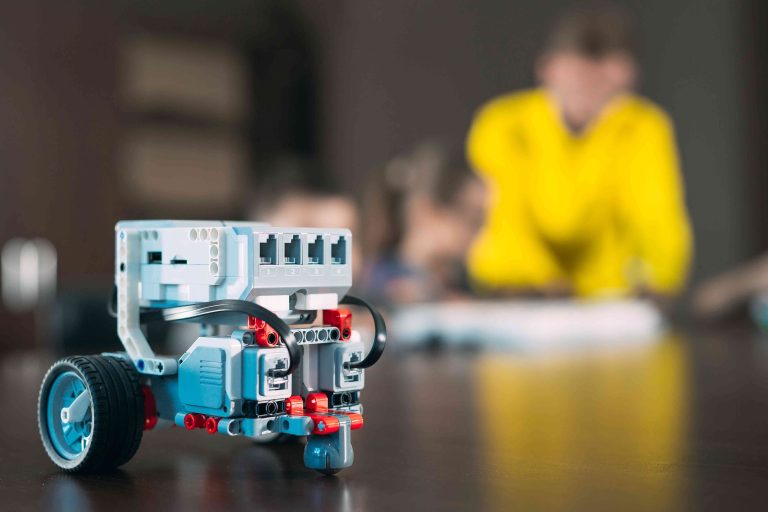
The skills students develop through robotics
Robotics supports both technical and wider transferable skills.
Technical skills may include programming, electronics, mechanical design, sensors, motors, mechanisms, automation and systems thinking. Depending on the setting, learners may work with simple programmable devices, microcontrollers, physical computing platforms, collaborative robots or simulation tools.
These skills are increasingly relevant to careers in engineering, manufacturing, automation, computer science, logistics, healthcare technology, construction and the wider digital economy.
Robotics also builds wider skills. Students often work in teams, share roles, explain ideas, manage tasks and solve problems together. They learn to test, refine and improve their work, building confidence as well as competence.
Robotics across the education journey
Robotics can support learners at every stage.
In primary education, robotics can introduce pupils to early computing skills in a playful, hands-on way. Using floor robots, block-based coding tools and simple programmable devices, children can give instructions, predict what will happen and learn from the results.
In secondary schools, robotics can make computing and STEM more practical. Students can move beyond screen based coding and explore how software interacts with hardware, sensors, motors, mechanisms and movement.
In further education, colleges and vocational training, robotics can support technical skills linked to engineering, manufacturing, automation and maintenance. Learners can gain practical experience with control systems, fault-finding, sensors, actuators and industrial processes.
In higher education, robotics can support advanced teaching, research and innovation across engineering, computer science, AI, mechatronics and automation.
Used thoughtfully, robotics can also support inclusive learning by offering visual, tactile and collaborative ways into STEM.
Preparing students for future careers
Robotics links classroom learning with the world of work.
As industries adopt automation, artificial intelligence and smart technologies, learners need more than theoretical knowledge. They need to understand how technology works, how systems interact and how to solve practical problems.
Robotics introduces students to coding, sensing, control systems, automation and engineering design. It also helps them practise communication, teamwork, creativity and resilience.
For education providers, this makes robotics a useful way to connect STEM learning with employability and career pathways.
What education providers should look for in robotics solutions
For robotics to have lasting value, education providers need more than exciting equipment. They need solutions that are practical, relevant and sustainable.
When choosing a robotics solution, key considerations include:
- Curriculum relevance: does the solution support clear learning objectives?
- Platform and capabilities: does the robot platform suit the age group, learning level and intended outcomes?
- Ease of use: can teachers and learners get started with confidence
- Training and support: are resources, onboarding and technical guidance available
- Scalability: can the solution grow from a small set of kits to wider provision?
- Long-term value: is the equipment durable, flexible and useful across courses or year groups?
- Industry relevance: does it reflect the technologies learners may encounter in further study or work?
Robotics as part of a modern education strategy
Robotics has an important role to play in modern education. It helps make STEM and computing more engaging, more practical and more connected to the world beyond the classroom.
It supports technical knowledge, but it also develops creativity, collaboration, critical thinking and resilience. It can inspire younger learners, stretch older students and help technical education providers build stronger links with industry.
For schools, colleges, universities and training providers, the opportunity is not simply to buy robots. It is to use robotics as a platform for richer learning, stronger skills development and better preparation for the future.
At NextGen Ri, we help education providers choose robotics solutions that are practical, reliable and relevant to their learners. From introductory classroom tools to more advanced robotics and automation platforms, the right solution can help educators bring STEM learning to life and give students the skills they need for a rapidly changing world.
Looking to introduce or expand robotics in your education setting? NextGen Ri can help you choose practical, scalable solutions that support curriculum delivery, learner engagement and long-term skills development.